Our Purpose
A1 Diagnosis is a US-based medical diagnostics company developing a blood-based risk assessment platform for age-related macular degeneration (AMD).
We're developing the world's first blood-based test that can detect alterations associated with AMD risk years before vision loss begins—enabling proactive eye care.
Six years of specialized AMD biomarker research. One mission: make proactive eye health possible for everyone.
The Paradigm Shift
Just as cholesterol testing predicts heart disease risk years before a heart attack, the Proactive Vision Analysis Platform analyzes blood biomarkers that may be associated with AMD development—during the critical window when prevention strategies may be most effective.
Vision: The Proactive Health Era
A1 Diagnosis represents more than a single blood test—it embodies a fundamental shift in healthcare philosophy.
- Building toward a future where disease risk is identified years before clinical manifestation
- Enabling intervention during the critical window when prevention strategies can be most effective
- Positioning as the patient identification platform as AMD prevention therapies advance to market
- Transforming AMD from a leading cause of irreversible blindness into a preventable condition
Leadership
A1 Diagnosis was founded by Dr. Mustafa Ozgul, who conducted six years of specialized research into age-related macular degeneration biomarkers at UC Irvine's Gavin Herbert Eye Institute. That work—focused on AMD biomarkers, mitochondrial-derived peptides, and retinal degeneration—established the scientific foundation for the company's blood-based risk assessment platform.
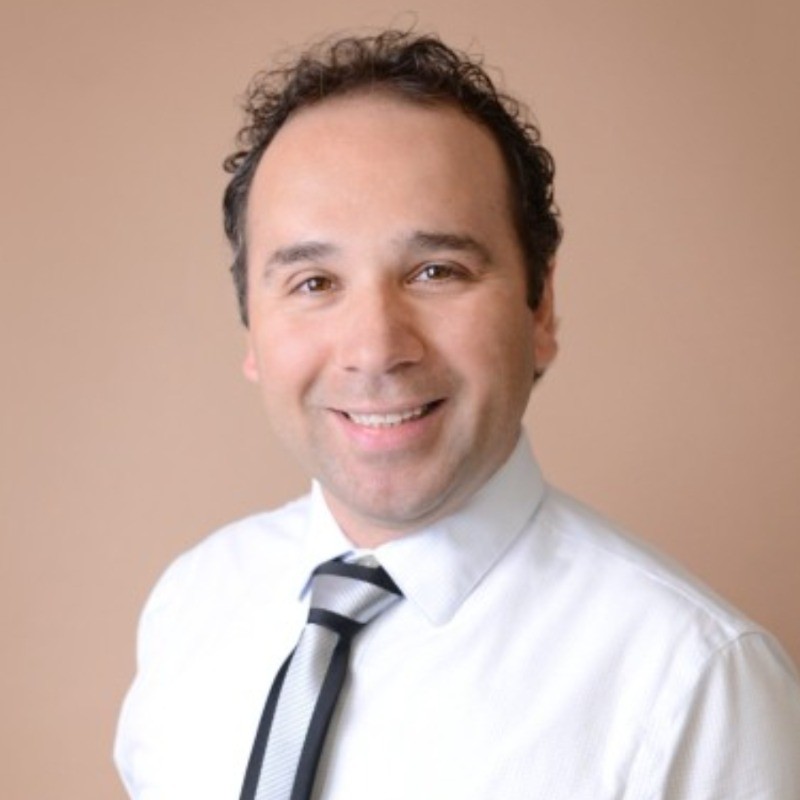
Mustafa Ozgul, MD
Founder & CEO
- 6 years AMD research, University of California Irvine
- 15 publications (4 journal articles, 11 ARVO abstracts)
- ML/DL algorithms analyzing 10,000+ molecules
Our History
A1 Diagnosis builds on six years of specialized AMD biomarker research at UC Irvine's Gavin Herbert Eye Institute. From that academic foundation, the company was formed in January 2024 to carry the research forward into a commercial diagnostic. Current efforts center on establishing CLIA-certified clinical laboratory infrastructure, with a target of Q1 2027 for CLIA certification completion.
The Full Timeline
Six milestones, from academic research at UC Irvine to laboratory development today.
Corporate Impact
The impact we are working toward is measured against the scale of the problem.
Closing the diagnostic gap
25% of AMD cases are missed during dilated eye exams (Neely et al., JAMA Ophthalmology 2017)—both ophthalmologists and optometrists miss at equal rates. Among missed cases, 30% had large drusen consistent with intermediate AMD.
Why earlier matters
AREDS 2 supplements reduce progression risk by approximately 25% when started at the intermediate stage. Research published in the National Institutes of Health shows that personalized preventive care programs reduce emergency room visits and urgent care utilization while increasing long-term health care savings.
The population at stake
169 million Americans aged 35 and older face AMD risk with no accessible blood-based screening option, and AMD affects approximately 196 million people globally. As emerging AMD prevention therapies advance through clinical trials, the people who would benefit most from them are precisely the ones current practice identifies last — after vision loss has already begun.
Free public education
A1 Diagnosis publishes a free, citation-backed education library covering what AMD is, how it progresses, its known risk factors, current and emerging treatments, and what proactive health care means. It is open to anyone, with no account and no purchase.
- What is AMD?
- AMD Stages & Progression
- Risk Factors
- What is Proactive Health Care?
- Treatment Landscape
- Frequently Asked Questions
That library also covers living well with a diagnosis. A diagnosis of AMD does not mean complete vision loss — many people with AMD continue to live independently and maintain a good quality of life with the right support and resources, and we document those resources rather than only the risk. See low-vision resources.
The standards we hold ourselves to
Regulatory honesty
Our test is not FDA-cleared or approved, and we say so on every page that describes it. We publish our intended pathway — a CLIA-certified laboratory-developed test — and the limits of our current evidence, including that proof-of-concept accuracy came from a 12-sample study.
Laboratory quality
Performance characteristics will be validated by A1 Diagnosis Laboratories following College of American Pathologists (CAP) and Clinical Laboratory Improvement Amendments (CLIA) regulations, with CLIA certification targeted for Q1 2027.
Citable science
Our educational content cites the National Eye Institute, the NIH, and peer-reviewed literature by name, so readers can check the primary source rather than take our word for it.
Data stewardship
We are committed to HIPAA-compliant data handling and storage. We do not sell, trade, or share your personal information with any other third parties. Read our privacy policy.
A1 Diagnosis is pre-commercial. The items above describe the standards we are building to and the problem we are working on — not outcomes we have already delivered.
Collaborations
Research provenance
The science behind A1 Diagnosis originated at UC Irvine's Gavin Herbert Eye Institute, where our founder conducted six years of specialized research into age-related macular degeneration biomarkers. That work produced 15 peer-reviewed publications—4 journal articles and 11 ARVO conference abstracts—covering AMD biomarkers, mitochondrial-derived peptides (Humanin-G, MOTS-c), and retinal degeneration.
View the full publication record →
Clinical validation
Our cross-sectional validation study is designed around 240 total samples — 60 samples in each of 4 disease groups spanning the full AMD spectrum, from healthy baseline through advanced disease — drawn from 3 or more clinical centers.
Where the platform could extend
The underlying approach — native peptide mass spectrometry that detects cell-death signatures years before symptoms — is not specific to AMD. We have mapped a multi-disease roadmap beyond our first indication, and those areas are where we expect future research collaborations to matter most.
See the development pipeline →
Who we would like to hear from
Eye care providers
Retinal specialists, ophthalmology and optometry practices interested in blood-based risk stratification as a complement to imaging — particularly given that a quarter of AMD cases are missed at dilated exam.
Clinical researchers & sites
Investigators and centers working on AMD biomarkers, retinal degeneration, or mitochondrial-derived peptides, and sites able to contribute characterized samples to validation work.
Laboratories
CLIA-certified laboratories and mass spectrometry groups with experience deploying high-end platforms in a clinical setting.
Investors
Investors focused on diagnostics and proactive health who want to review the platform, the validation plan, and the regulatory pathway in detail.
A1 Diagnosis does not currently claim any completed institutional partnership. The relationships described above are the ones we are actively seeking as the validation study and CLIA laboratory work proceed.
Contact
A1 Diagnosis is based in Orange County, California.
For media inquiries, physician enquiries, and investor relations, please use the email address above and we will route your message to the right person.
Important Regulatory Information
This test has not been cleared or approved by the US Food and Drug Administration. The test is under development and performance characteristics will be determined through clinical validation studies. Target commercialization as a CLIA-certified laboratory-developed test in Q1 2027. Proof-of-concept accuracy cited represents initial validation with 12 samples and requires expansion to larger clinical studies.